
OpenBot Lets You Lead AI Coworkers Built on Any Agent, Any Model, Any Server
OpenBot™ Lets You Lead AI Coworkers Built on Any Agent, Any Model, Any Server
At a personal-agent demo night in San Francisco on Nov. 18, I showed a room of developers how OpenBot™ works and why CopilotKit built it. Here is what I covered, with a link to each moment in the video.
Design for the agent and the person
Agents now use many of the products on the internet, so builders have to plan for two experiences, not one. The agent experience, or AX, is how an agent works with your product. The user experience inside an agent chat, or UAX, is how a person sees your product through that agent. I took the terms from a post by a co-creator of MCP Apps.
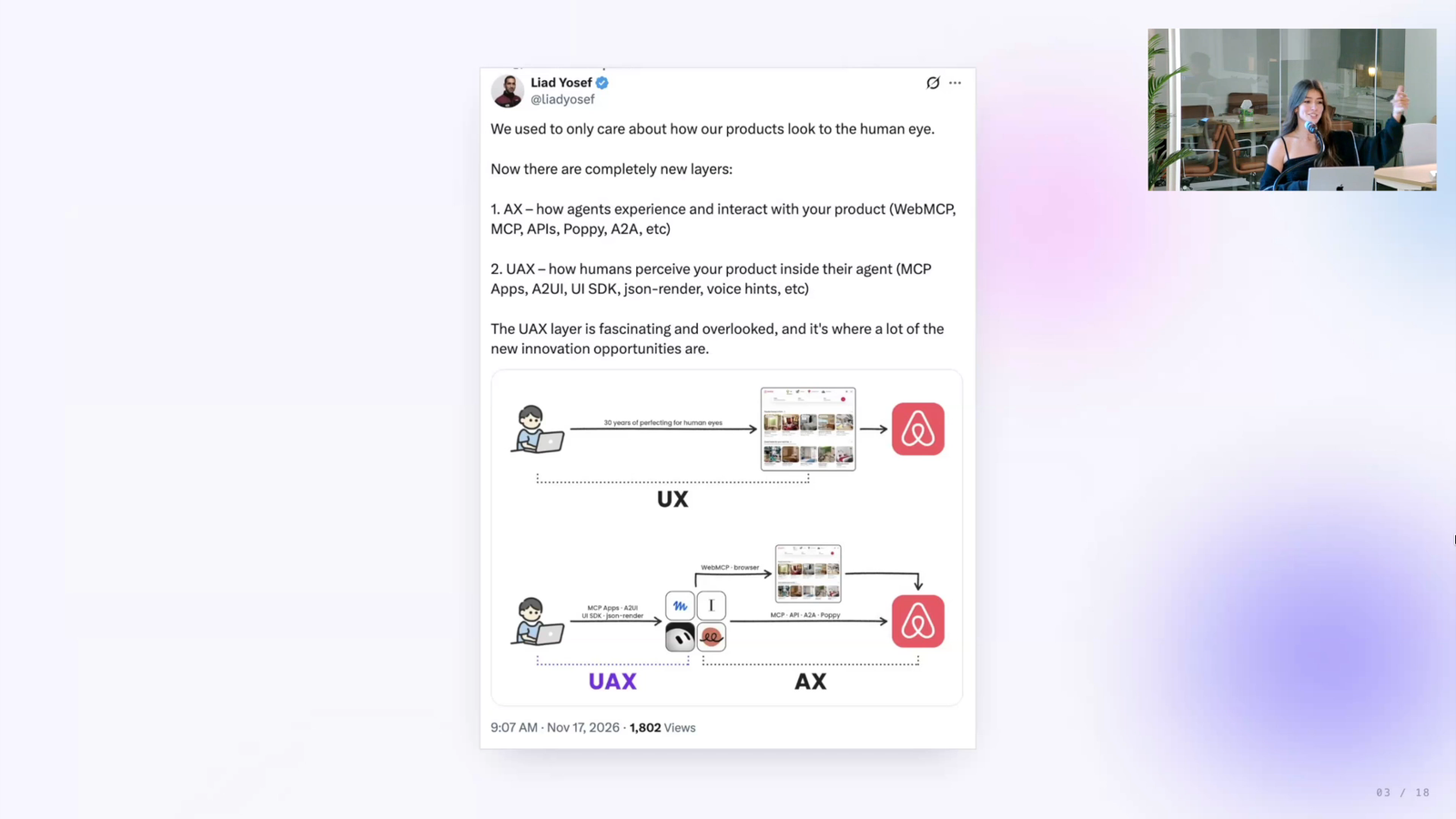
A post on X explains AX, how agents use a product, and UAX, how people see it inside their agent.
Three ways people work with agents
People reach agents in three main ways. Embedded agents are chatbots inside web apps. The headless web is agents used from the terminal, such as Claude Code. Personal agents are the newest: a workspace where you lead agents of your own. AG-UI, the open protocol CopilotKit created to connect agents to applications, supports all three. More than 50% of the Fortune 500 use CopilotKit in production. CopilotKit and AG-UI have roughly 60,000 GitHub stars between them, and AG-UI has more than 6 million weekly installs.
Watch this part: Three ways to interact with agents
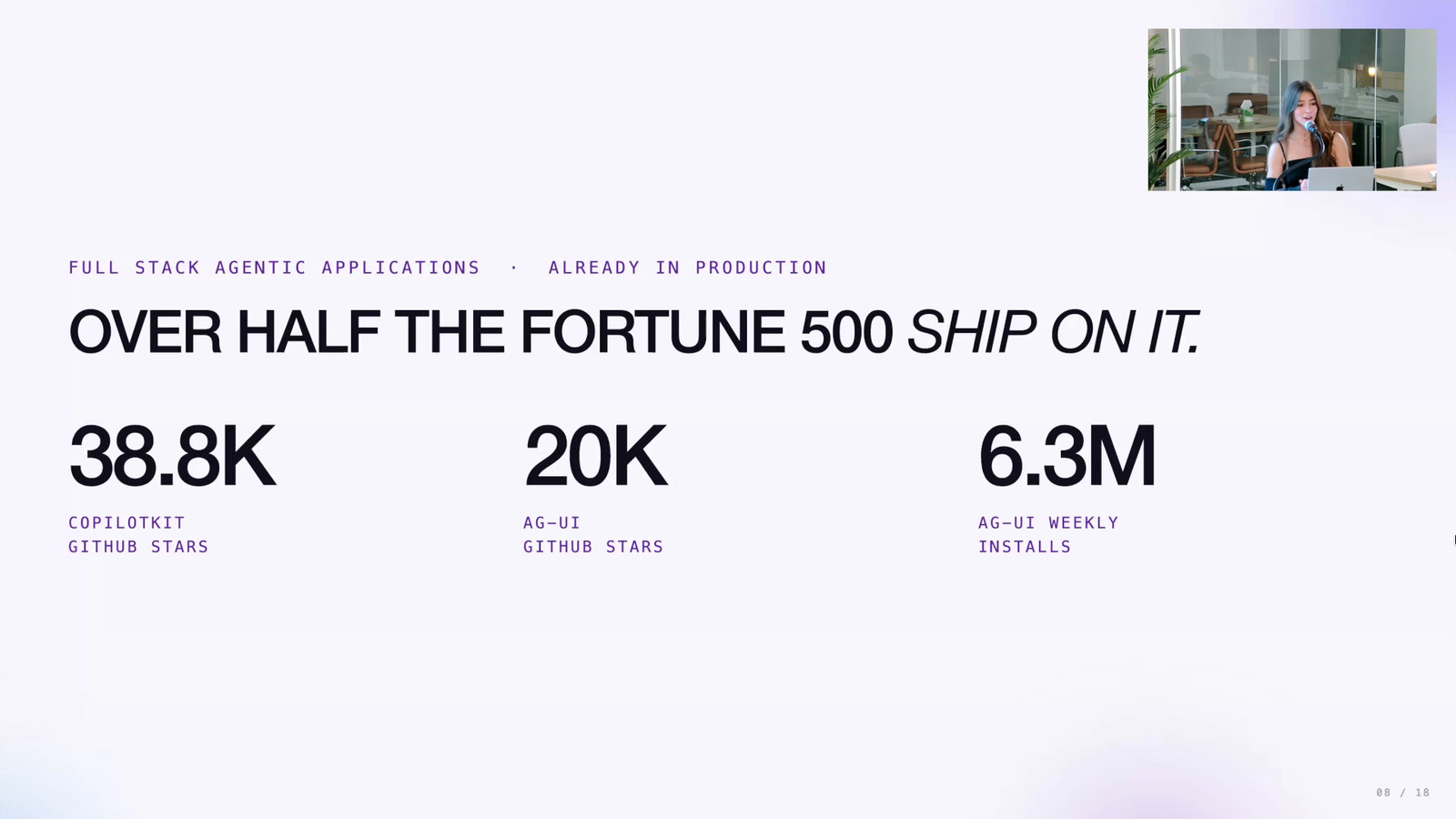
A slide cites GitHub stars and weekly installs for CopilotKit and AG-UI.
Why OpenBot
Many people choose a personal agent by the model behind it or the look of the app. OpenBot removes that choice. You bring any agent that speaks AG-UI, and more than 20 agent frameworks do, including the Claude Agent SDK, LangChain and Google ADK. You use the models you prefer, through your own subscriptions or API keys. You can also self-host, on AWS, Azure, Google Cloud or Kubernetes, so your data stays on infrastructure you control. CopilotKit, which makes OpenBot, is SOC 2 Type II compliant.
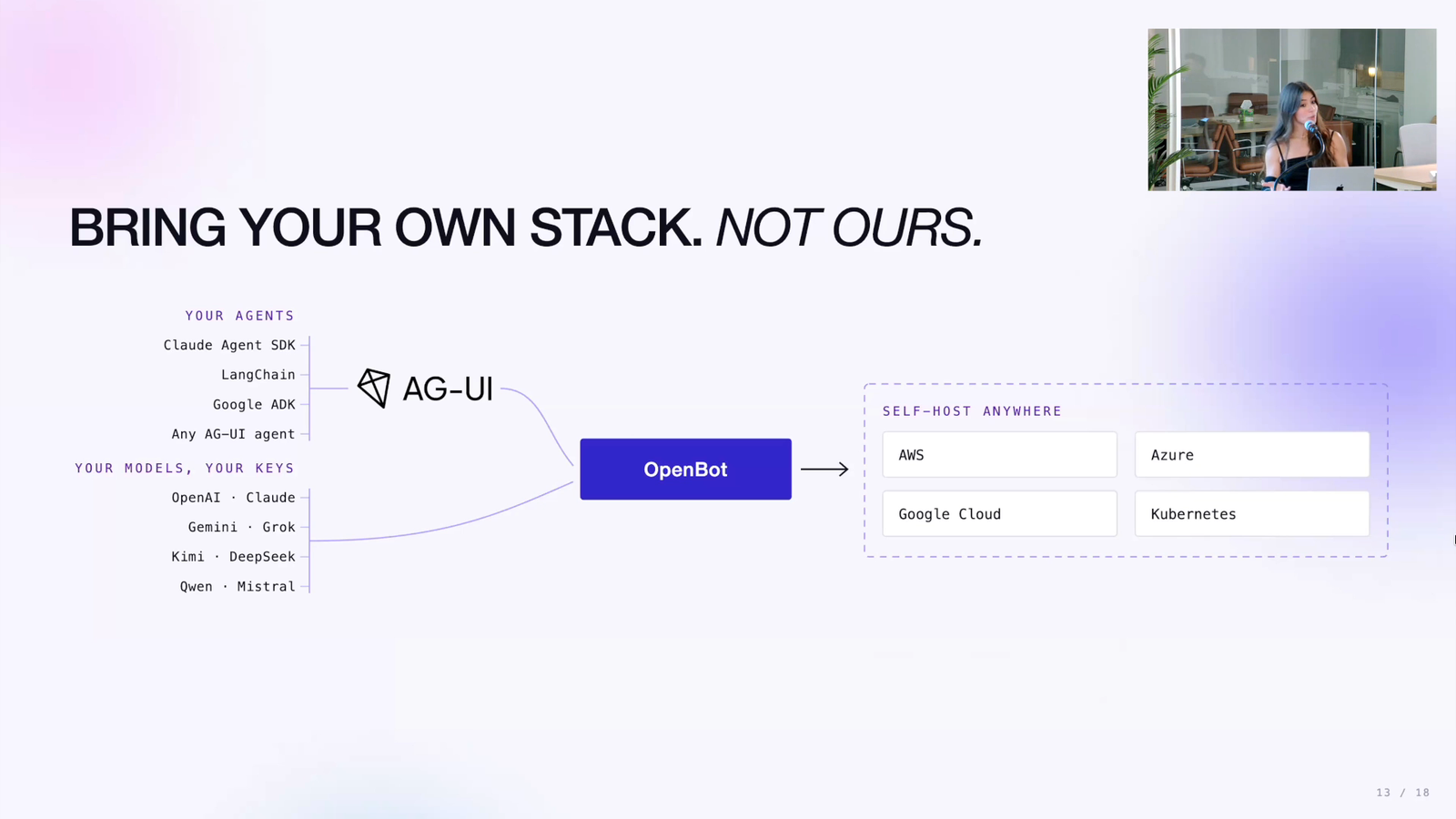
A slide shows agents and models feeding OpenBot, which can run on AWS, Azure, Google Cloud or Kubernetes.
Live demo: a new coworker and a chart
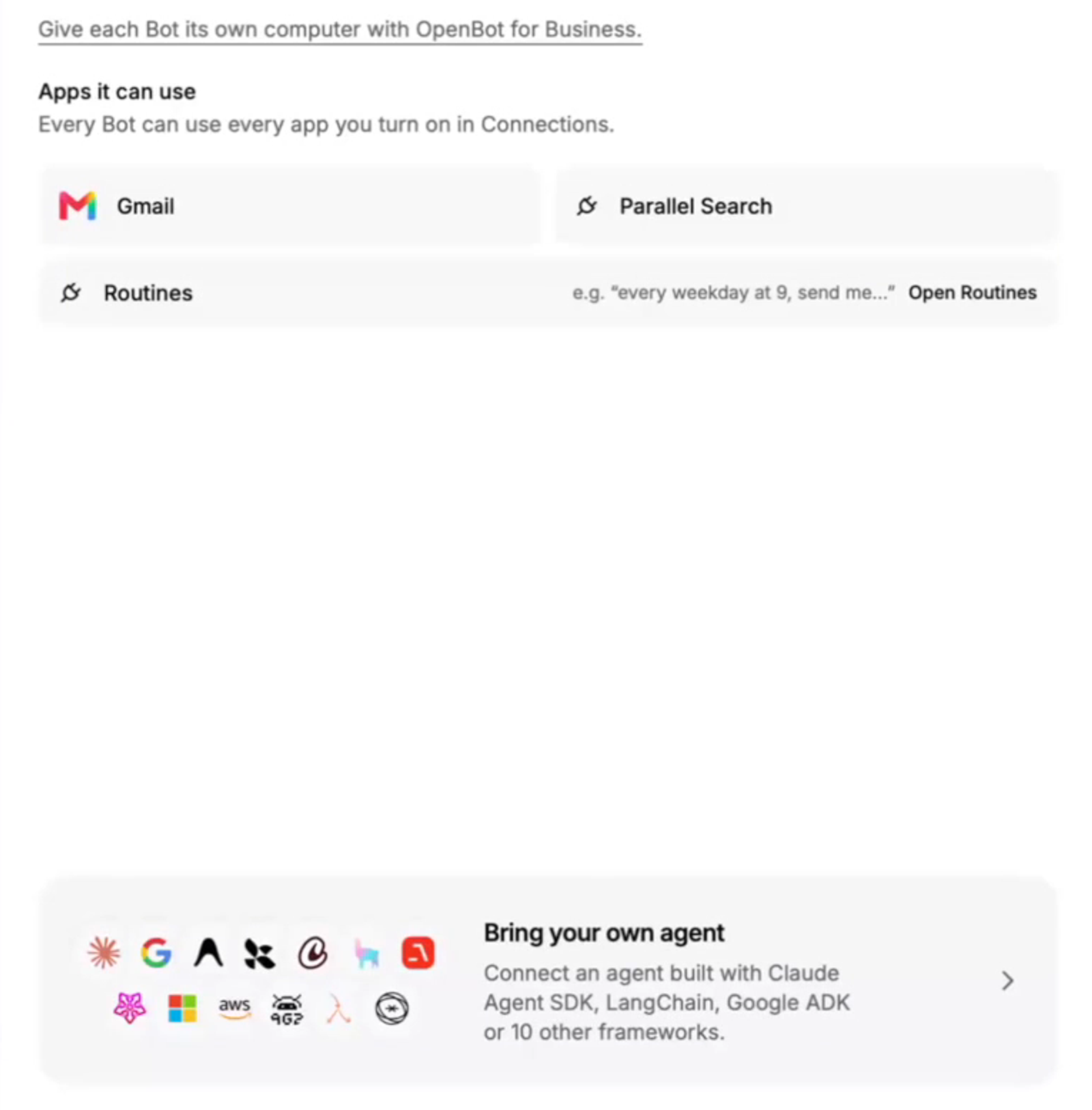
OpenBot's New Bot form offers a Bring your own agent option for an agent built with Claude Agent SDK, LangChain or Google ADK.
In the desktop app, I created a new bot, which is what the app calls each AI coworker, and connected it to an agent by entering the agent's address. I then asked it for a chart of the 10 highest-scoring stories on Hacker News. The coworker used the computer to find them and returned a bar chart inside the conversation instead of a wall of text. You can take control of the computer at any point. OpenBot answers with widgets, and A2UI, Google's approach to generative interfaces, is built in. You can also add apps such as Gmail and Fireflies, and pick a skin, such as OpenDuet or OpenDots, to change how the app looks.
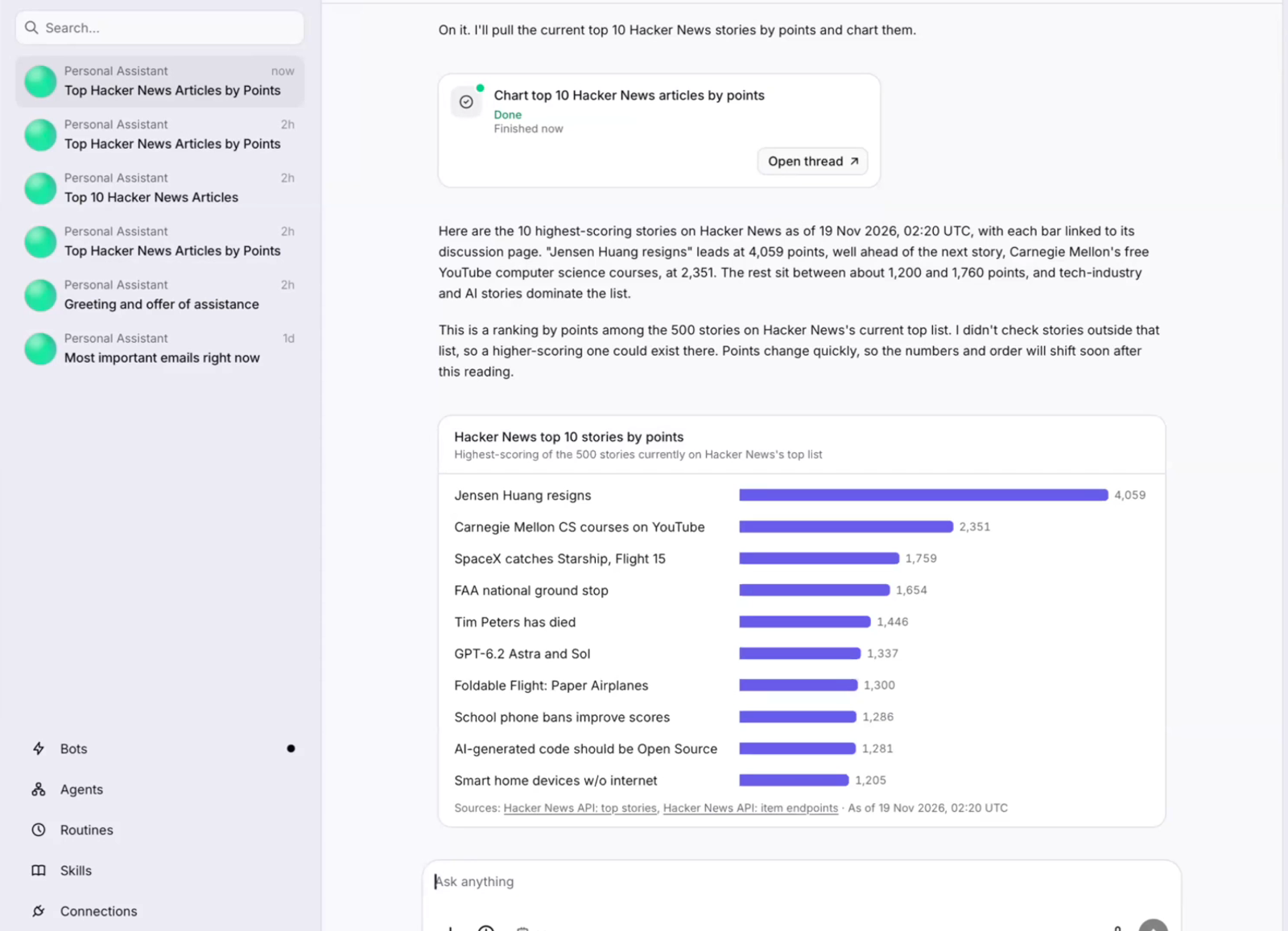
OpenBot answers with a bar chart of the 10 highest-scoring Hacker News stories.
I also asked for an email I needed to reply to. OpenBot opened a Google permission screen so I could connect Gmail.
Watch this part: Gmail connection
OpenBot for Business
Companies get governance: administrators decide what each coworker can do. Several employees can share a bot, and people sign in through company single sign-on. OpenBot for Business is in early access. You can also teach a coworker a new task by recording yourself doing it, and it turns what it learns into a skill. OpenBot has about 13,000 GitHub stars and was featured on Product Hunt.
Watch this part: OpenBot for Business
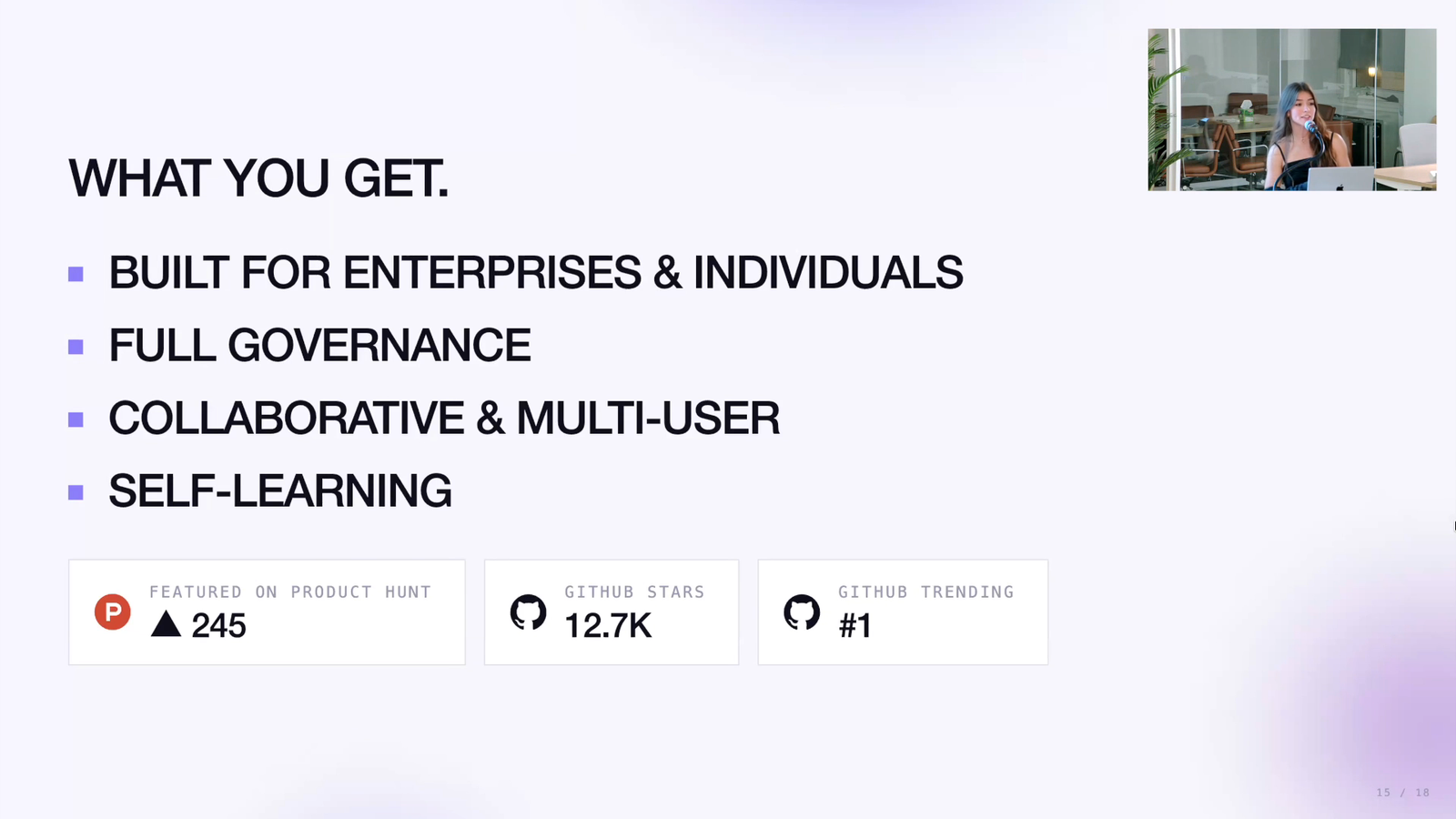
A slide lists governance, multi-user collaboration and self-learning among OpenBot's features.
To try OpenBot, visit open.bot.